2026-10-16 ·
How Dry Climate Conditions Affect Fire Restoration in Winnetka
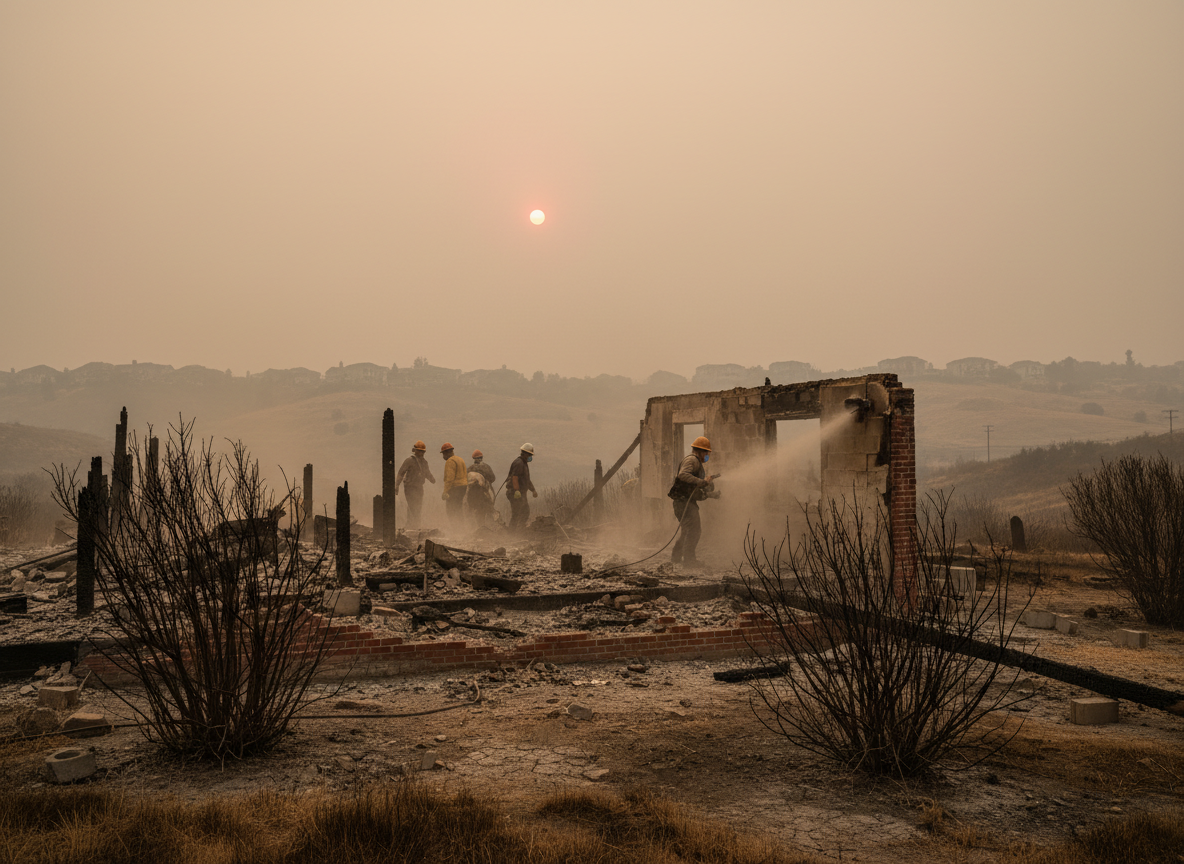
Winnetka's mild Mediterranean climate with warm dry summers means fire restoration crews often face soot that penetrates deeper into porous materials like drywall and insulation, requiring 3-7 extra days of specialized cleaning before surfaces can be sealed.
Soot Behavior in Low-Humidity Summers
Dry air in Winnetka and nearby Sherwood Forest keeps smoke particles airborne longer after a fire, allowing them to settle into cracks around windows and electrical outlets at Winnetka Park homes. Crews must use HEPA vacuums followed by alkaline sponges on every vertical surface because acidic soot etches paint faster when relative humidity stays below 30 percent. In older housing stock built before 1970, this same dryness makes attic insulation hold fine particles that later cause odor complaints if not fully removed. Operators working near Pierce College note that summer fires in single-story ranch homes demand extra passes with odor-neutralizing agents because low moisture prevents natural dissipation. These conditions also increase the risk of re-soiling during the final wipe-down stage.
Extended Drying Requirements After Suppression
Water used to extinguish flames evaporates more slowly in Winnetka's arid summers, leaving hidden pockets of dampness behind baseboards and under subfloors in Canoga Park and Reseda border properties. Restoration teams deploy industrial dehumidifiers rated at 70 pints per day for at least 72 hours, then verify moisture levels with pin meters to confirm readings below 12 percent before reconstruction begins. Without this step, mold can appear within two weeks once the dry season returns. Properties near Woodland Hills with slab foundations need additional perimeter drying because clay-heavy soil retains water longer than sandy areas farther east in the San Fernando Valley.
Impact on Adjacent Neighborhoods and Seasonal Patterns
Fires that start during peak summer heat in Winnetka often spread soot into neighboring Reseda and Woodland Hills because prevailing winds carry particles across open lots around Pierce College. Restoration protocols therefore include negative-air machines on every job to protect unaffected rooms. Homeowners in Sherwood Forest frequently request pre-season inspections because dry vegetation and older electrical systems combine to raise ignition risk. The same climate that speeds initial combustion also lengthens the final odor-removal phase, as low humidity keeps volatile compounds from breaking down naturally.
Practical Steps for Property Owners
Document every affected room with dated photos before any cleaning begins. Contact a local team that maintains 24/7 availability at 7574 Winnetka Ave for immediate board-up to prevent wind-driven soot from entering through broken windows. Schedule follow-up inspections 30 days after work completes, especially in homes within two blocks of Winnetka Park where summer winds can re-deposit particles. Review the preparing Winnetka properties for Santa Ana wind fire season guide for seasonal checklists, then consult fire and smoke damage restoration details if odors persist after initial cleaning.