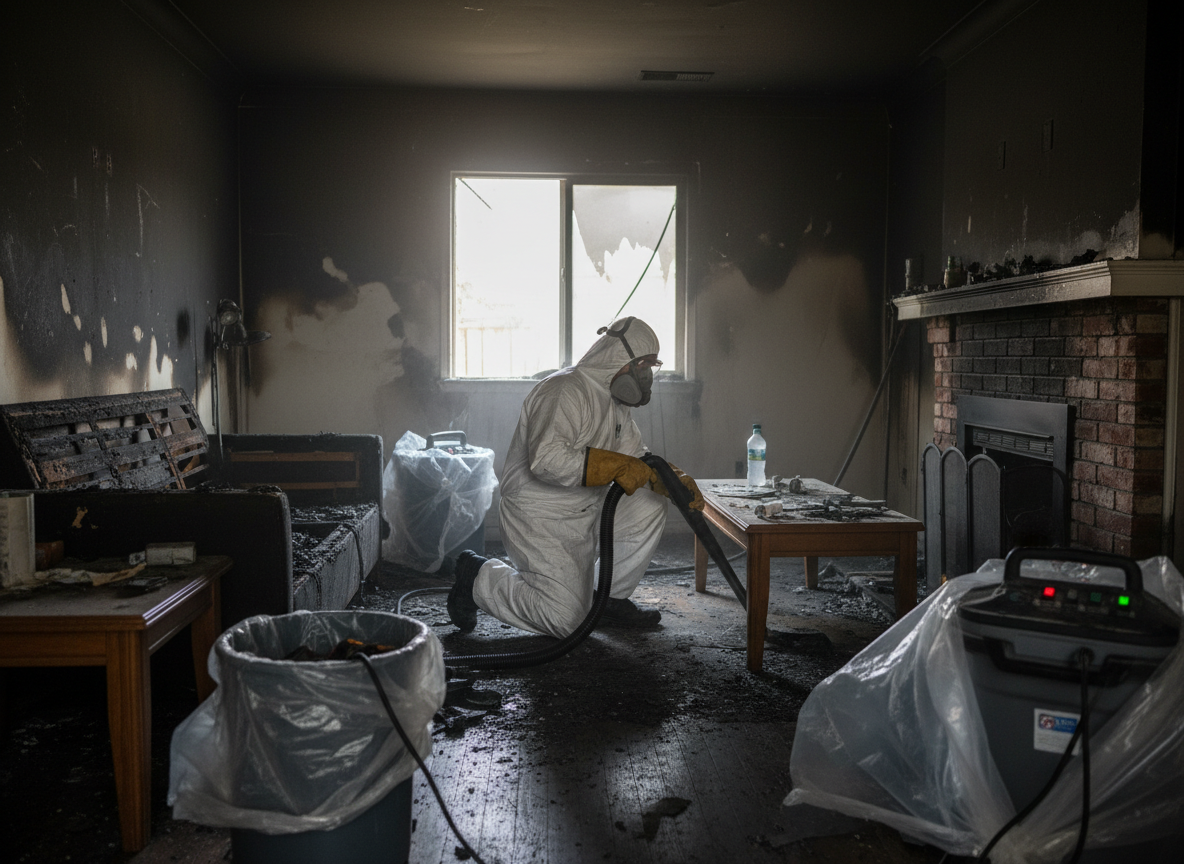
Winnetka homes built in the 1950s and 1960s around Winnetka Park and Pierce College often feature lath-and-plaster walls and older insulation that trap smoke particles deep into cavities. In the mild Mediterranean climate with warm dry summers, soot from even small kitchen fires travels quickly through HVAC systems common in these single-story ranches, requiring targeted removal before it sets into fabrics and drywall. Crews working out of 7574 Winnetka Ave respond 24/7 to contain odors before they migrate into adjacent Sherwood Forest properties.
Los Angeles County fire codes require proper disposal of charred materials and verification that no hidden embers remain in attics or crawl spaces typical of Reseda-border homes. Dry summer conditions leave fine ash airborne longer, so technicians use negative-air machines and HEPA filtration to prevent cross-contamination during debris removal. Residue from synthetic furnishings common in Woodland Hills rentals bonds differently to concrete slabs than natural wood smoke, changing the sequence of surface cleaning.
Cleanup after electrical fires in Canoga Park garages frequently involves separating melted wiring from framing lumber without disturbing load-bearing posts. Crews document every layer removed so homeowners can see the progression from visible char to hidden soot layers. This methodical approach prevents callbacks when summer winds later stir residual particles back into living spaces.
Technician insight
In Winnetka the thing that catches most people out with fire damage clean up is how quickly smoke travels through the shared attic spaces in 1950s tract homes near Winnetka Park when the dry summer winds pick up. Homeowners often focus only on visible rooms and miss the insulation that needs full replacement.
Kitchen fire in a Sherwood Forest ranch
Smoke from a stove fire traveled through the attic into two bedrooms. We found soot embedded in the original fiberglass insulation and along HVAC ducts serving the whole house. After removing the insulation and cleaning the ducts, we treated all surfaces and returned the home to the family within four days.
How it works
- 1
Initial Assessment
Technicians inspect all affected rooms, attics, and HVAC runs to map smoke migration paths specific to Winnetka construction.
- 2
Debris and Char Removal
Loose debris and heavily damaged materials are bagged and removed while protecting unaffected areas from further soot spread.
- 3
Surface and Cavity Cleaning
HEPA vacuums and specialized agents clean walls, ceilings, and cavities where older insulation holds particles.
- 4
Odor Neutralization and Final Clearance
Air scrubbers and sealing agents address lingering smells before returning the property to normal use.
Pricing
Cost depends on square footage affected, depth of soot penetration, and whether HVAC systems require cleaning.