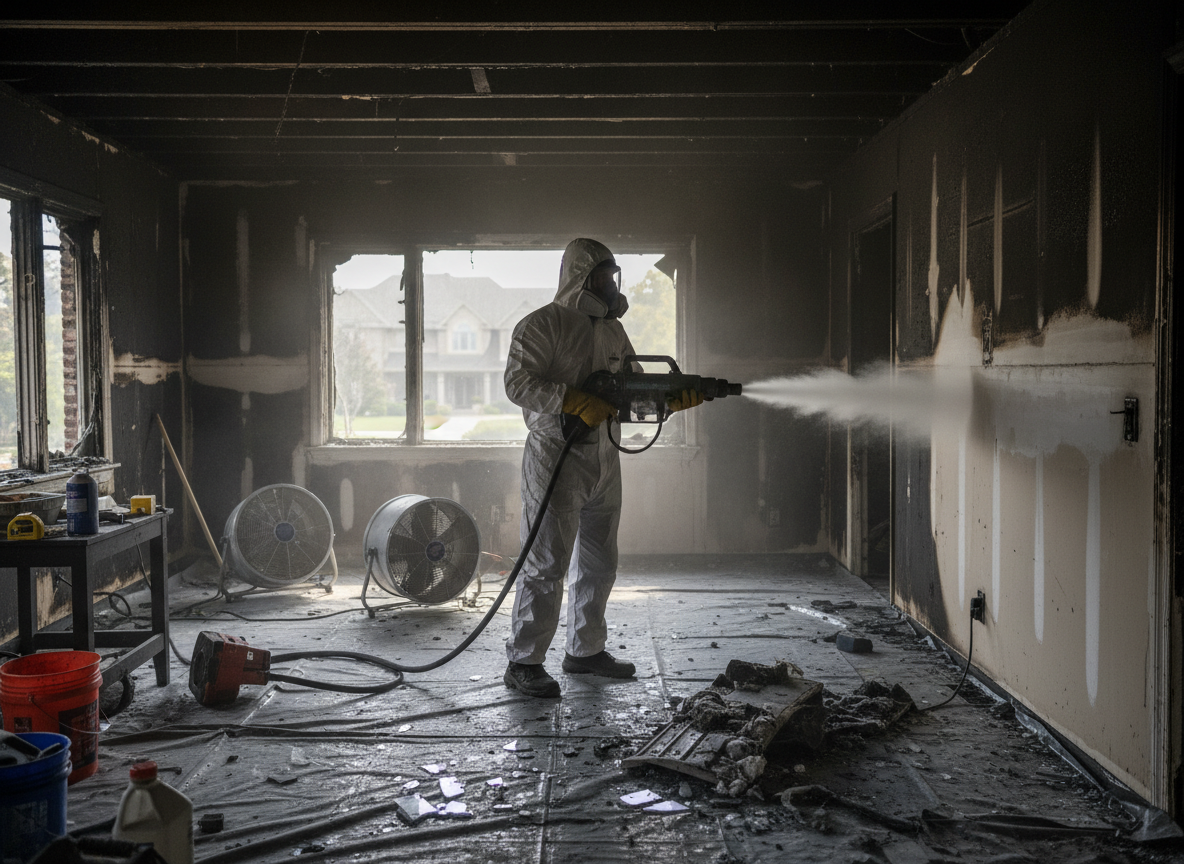
Winnetka's older housing stock from the 1950s and 1960s features stucco exteriors and wood framing that readily absorbs smoke particulates during the region's warm dry summers. Smoke travels through attic spaces and HVAC systems in neighborhoods like Sherwood Forest, often reaching properties near Winnetka Park and Pierce College. Restoration requires isolating affected zones before using HEPA filtration and thermal fogging to neutralize odors without spreading residue to adjacent rooms in Canoga Park or Reseda.
Porous materials such as drywall, insulation, and hardwood floors in these homes trap acidic smoke compounds that can cause ongoing corrosion if not fully extracted. Technicians test pH levels on surfaces and remove contaminated sections rather than relying on surface cleaning alone. In Los Angeles County structures, building codes require proper disposal of soot-laden debris to prevent recontamination during reconstruction phases.
The mild Mediterranean climate means low humidity often leaves smoke particles airborne longer, complicating containment in multi-story homes near Woodland Hills. Crews deploy negative air machines early and monitor for hidden migration paths through shared walls common in Winnetka developments. This approach prevents secondary damage that appears weeks later when temperatures rise again.
Technician insight
In Winnetka, the thing that catches most people out with Smoke damage restoration is how the dry summers let smoke travel through the older stucco homes in neighborhoods like Sherwood Forest and settle deep into insulation near Winnetka Park before residents notice.
Hidden smoke in a Sherwood Forest residence
Problem: smoke from a kitchen fire had migrated into attic insulation. What we found: residue had traveled through shared wall cavities into bedrooms of a 1960s wood-frame home near Winnetka Park. What we did: contained the space, removed affected drywall and insulation, then neutralized odors with targeted fogging. Outcome: the home passed clearance testing and was returned to the owner without lingering smells.
How it works
- 1
Site Assessment
Inspect all affected rooms, test surfaces for pH and residue depth, and map smoke migration paths through attics and ducts in the specific Winnetka property.
- 2
Containment Setup
Seal off impacted areas with plastic barriers and negative air pressure to stop particulates from reaching unaffected spaces like those near Sherwood Forest.
- 3
Residue Removal
Use HEPA vacuums, sponges, and approved solvents on hard surfaces while discarding porous items that cannot be restored.
- 4
Odor Neutralization
Apply thermal fogging or ozone treatment followed by air scrubbing to eliminate embedded smells in wood and fabric.
- 5
Final Verification
Conduct clearance testing and document the restored condition before returning the home to the owner.
Pricing
Costs depend on square footage affected, depth of smoke in insulation, and whether HVAC cleaning is required; upfront quotes provided after inspection.