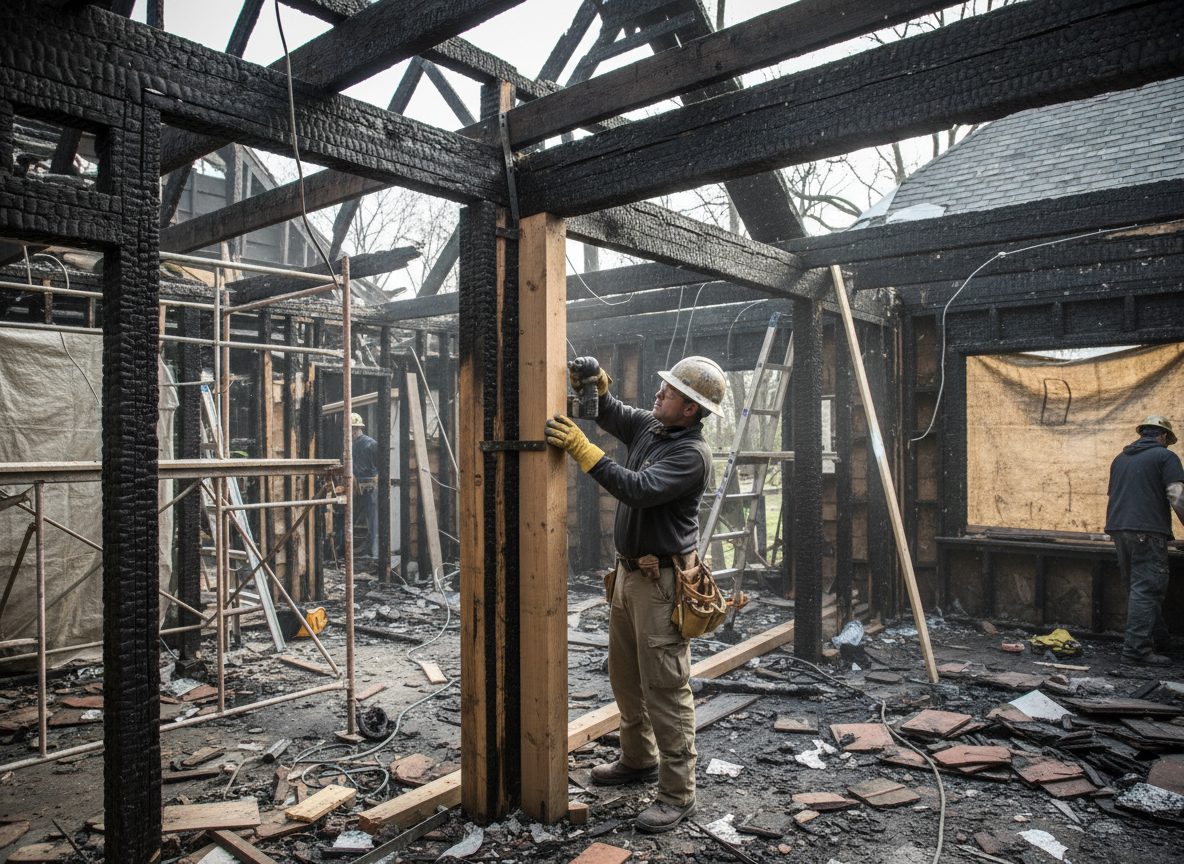
Winnetka's post-war housing stock, common in Sherwood Forest and near Winnetka Park, often features older dimensional lumber that chars deeply during fires. After suppression crews from Los Angeles County departments wet the structure, hidden moisture pockets form behind plaster and lathe, leading to rot that compromises joists within weeks. Technicians must open walls systematically to inspect for these issues rather than relying on surface checks, especially with the area's warm dry summers accelerating hidden decay once temperatures rise again.
Pierce College vicinity properties sit on flatter terrain that allows smoke and heat to travel horizontally through attics, weakening roof trusses across multiple bays. Structural repair after fire here requires sistering new lumber to original members while maintaining shear strength for seismic codes enforced in Los Angeles County. Crews also address water intrusion from garden hoses or hydrants that pools against slab foundations common in Reseda-adjacent blocks, preventing long-term settling.
Edge cases arise when fires reach electrical panels or gas lines in Canoga Park border homes, where aluminum wiring from the 1960s can melt into framing. Repairs demand coordination with licensed electricians to reroute safely before closing cavities. Dry Mediterranean conditions mean soot residue dries fast and becomes abrasive, so crews vacuum thoroughly before applying new sheathing to avoid future delamination.
Technician insight
In Winnetka the thing that catches most people out with Structural repair after fire is how the mild Mediterranean summers let residual moisture from suppression sit in older Sherwood Forest attics and turn into widespread rot before anyone notices. Homeowners often assume once the flames are out the structure is stable, but the dry air actually hides the problem until joists start sagging.
Sherwood Forest Attic Repair
A kitchen fire spread into the attic of a 1950s home near Winnetka Park. Crews found extensive charring along ceiling joists plus standing water from firefighters. They shored the roof, replaced compromised members, and dried the space before closing. The structure passed inspection and the family returned without further settling.
How it works
- 1
Initial Assessment
Technicians evaluate visible char, hidden moisture, and load paths at the 7574 Winnetka Ave base before mobilizing to the site.
- 2
Stabilization
Temporary shoring prevents collapse while crews remove compromised members in older Winnetka framing.
- 3
Material Replacement
New lumber is sistered or sistered to code standards accounting for Los Angeles County seismic requirements.
- 4
Final Inspection
Load testing and documentation confirm repairs meet local building standards before drywall closure.
Pricing
Costs depend on square footage affected, hidden damage extent, and required engineering; upfront quotes provided after assessment.