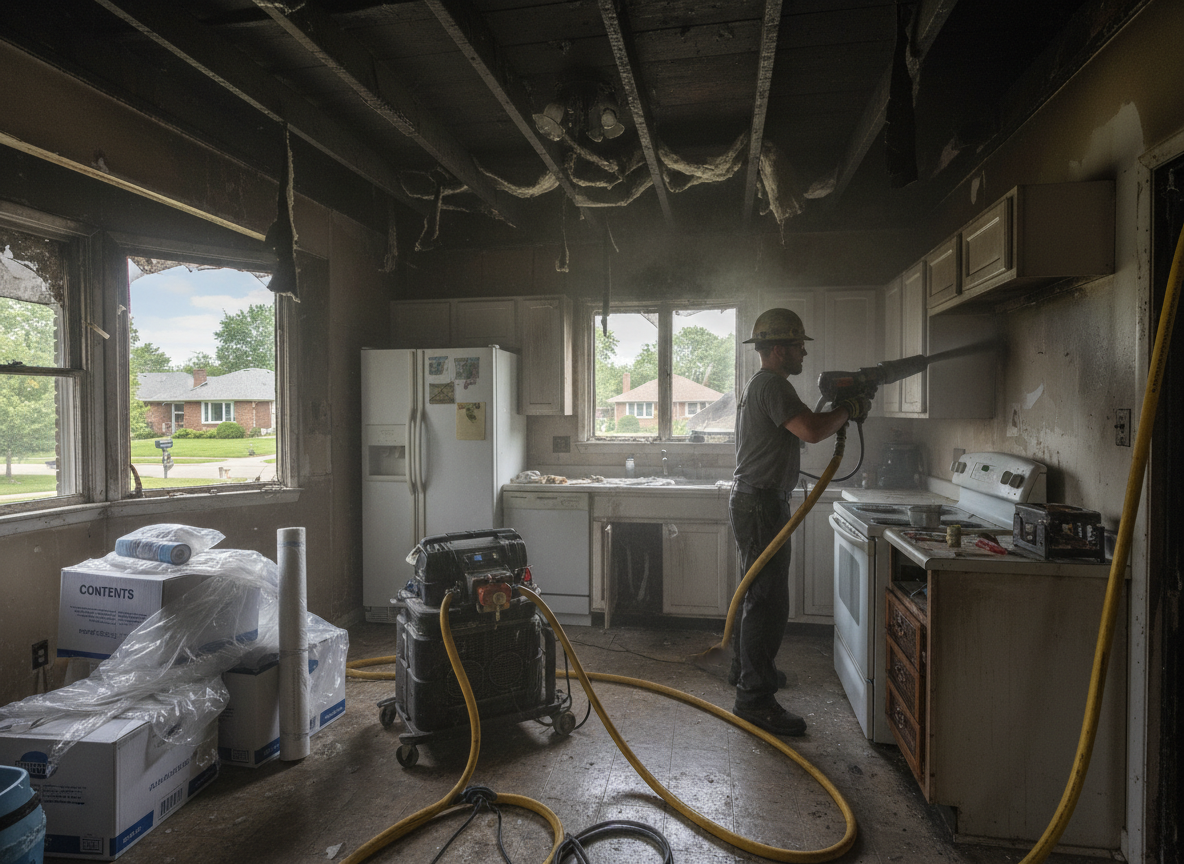
Winnetka homes built after World War II often feature wood framing and older electrical systems that can complicate smoke and soot removal after a fire. In Los Angeles County the mild Mediterranean climate with warm dry summers keeps vegetation parched, so embers from even small fires travel farther between properties in neighborhoods like Sherwood Forest. Crews must account for how summer winds push smoke into attics and wall cavities that are hard to reach without removing drywall. Soot on stucco exteriors bonds differently than on wood siding, requiring specific pH-neutral cleaners to avoid permanent etching.
After a fire, standing water from suppression efforts quickly becomes a secondary problem in the flat terrain around Winnetka Park and near Pierce College. Residue from retardants used by Los Angeles County Fire can corrode copper wiring and HVAC coils if not rinsed within days. Technicians check for hidden charring in single-story ranch homes common on streets near 7574 Winnetka Ave, where roof access is limited and insulation types vary from original fiberglass to later cellulose additions. Delaying cleanup allows acidic smoke to etch glass and discolor metal fixtures throughout the house.
Properties in adjacent Canoga Park, Woodland Hills, and Reseda share similar post-war construction, so restoration plans must adapt to the same mix of plaster, lath, and updated drywall. Emergency crews prioritize ventilating upper levels first because heat rises and leaves heavier soot deposits on ceilings. Owners are advised to avoid running HVAC systems until ducts are inspected, since fine particles from local fires circulate easily through shared wall cavities in these older tracts.
Technician insight
In Winnetka the thing that catches most people out with Emergency fire damage restoration is how quickly summer-dry air lets soot settle into the original plaster and lath walls of 1950s homes near Sherwood Forest. Homeowners often run fans too soon and push particles deeper into the single-wall construction common around Winnetka Park, making later cleaning twice as slow.
Attic ember intrusion after neighbor fire
A small structure fire two doors down sent embers onto a Winnetka roof during a dry summer evening. Inspection showed soot had entered the attic through ridge vents and coated insulation above bedrooms. Crews removed affected insulation, cleaned rafters with approved agents, and sealed the vents before reinstalling new material.
How it works
- 1
Initial Assessment
Technicians arrive within hours, document visible damage, and test air quality inside the structure.
- 2
Safety Securing
Board up openings, shut off utilities, and remove standing water from suppression efforts.
- 3
Soot and Smoke Removal
Apply pH-neutral cleaners to surfaces, then clean HVAC components and ductwork.
- 4
Drying and Monitoring
Deploy dehumidifiers and air movers while tracking moisture levels in walls and ceilings.
- 5
Final Walk-Through
Review cleaned areas with the homeowner and note any remaining items for later reconstruction.
Pricing
Upfront quotes provided after on-site inspection; final cost depends on square footage affected and materials involved.