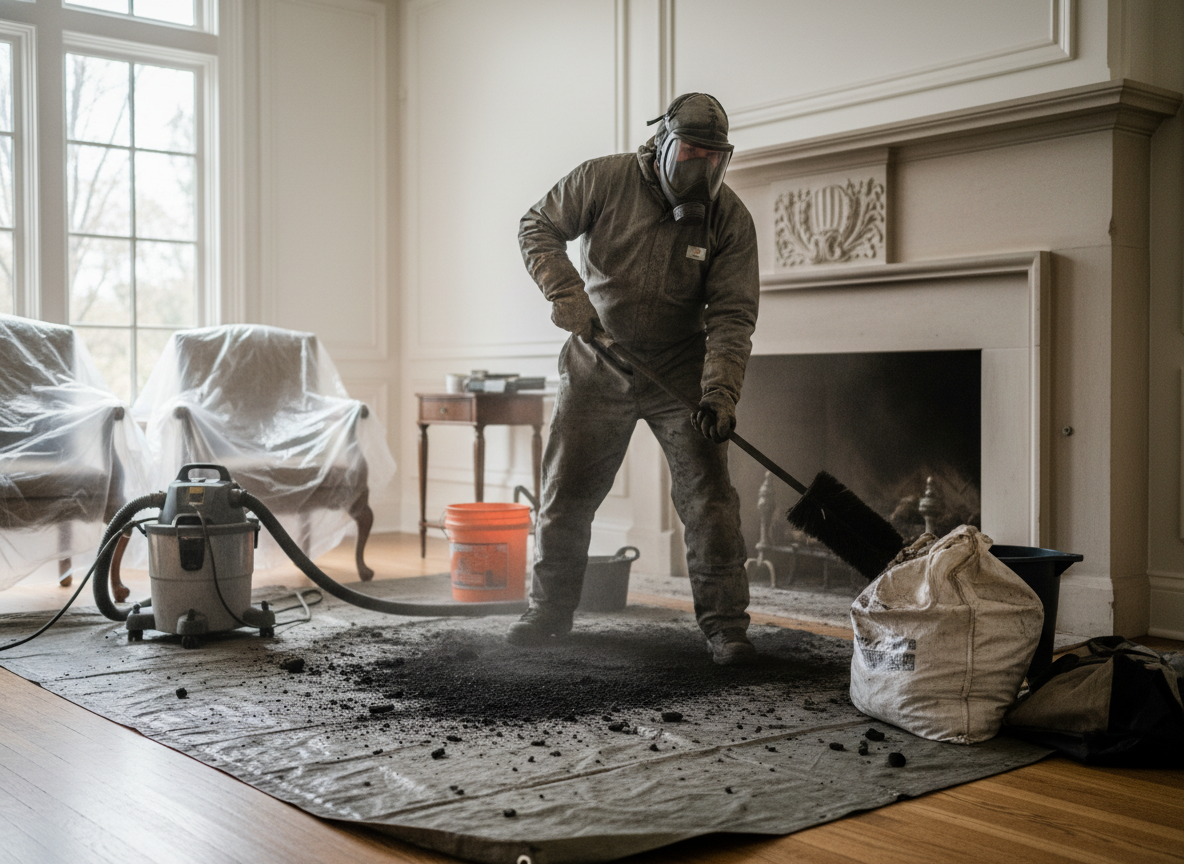
Soot from structure fires in Winnetka quickly bonds to the textured stucco exteriors and 1950s-1970s wood framing typical throughout the neighborhood and nearby Sherwood Forest. The area's mild Mediterranean climate with warm dry summers keeps humidity low, allowing fine particles to remain airborne longer and travel through open windows or HVAC returns before settling into insulation and behind baseboards. Technicians must use HEPA-filtered vacuums and alkaline sponges rather than water-based methods that can drive residues deeper into porous materials common in Los Angeles County ranch homes.
Near Pierce College and along Winnetka Avenue, many properties sit on flat lots with minimal grading, so smoke often migrates into crawl spaces and attached garages during fires. Soot removal here requires isolating those zones first to prevent cross-contamination into living areas. Crews document pH levels on surfaces before cleaning because acidic soot from synthetic furnishings can etch drywall and cabinetry if left untreated for more than a few days in the valley heat.
Residents in adjacent Canoga Park and Reseda frequently discover secondary soot film on window screens and ceiling fans weeks after the initial event. Proper removal involves progressive cleaning from the top down, followed by air scrubbing to capture remaining particulates that the dry summer winds can otherwise recirculate. Skipping this final step leaves a persistent odor that returns whenever temperatures rise.
Technician insight
In Winnetka, the thing that catches most people out with Soot removal is how the dry summer air lets fine particles travel through the older single-pane windows and into wall cavities of 1960s homes near Winnetka Park, so a quick wipe-down never reaches the real source.
Kitchen Fire Soot in Sherwood Forest
A cooking fire sent soot through the return vents of a 1964 ranch house. Inspection showed heavy film inside the ductwork and on the stucco ceiling. Crews sealed the system, extracted residues from the ducts and walls, then ran air scrubbers for 48 hours. The home passed clearance testing with no recurring odor.
How it works
- 1
Initial Assessment
Technicians inspect all affected rooms, HVAC returns and crawl spaces in the Winnetka home to map soot migration patterns.
- 2
Containment Setup
Plastic barriers and negative air machines isolate work zones to stop particles from spreading to clean areas of the property.
- 3
Surface Cleaning
HEPA vacuums and chemical sponges remove residues from walls, ceilings and contents without spreading moisture.
- 4
Air Scrubbing and Verification
Air scrubbers run until particle counts drop, followed by a final walkthrough to confirm no visible or odorous soot remains.
Pricing
Cost depends on square footage affected, number of rooms and HVAC involvement; estimates provided after on-site assessment.