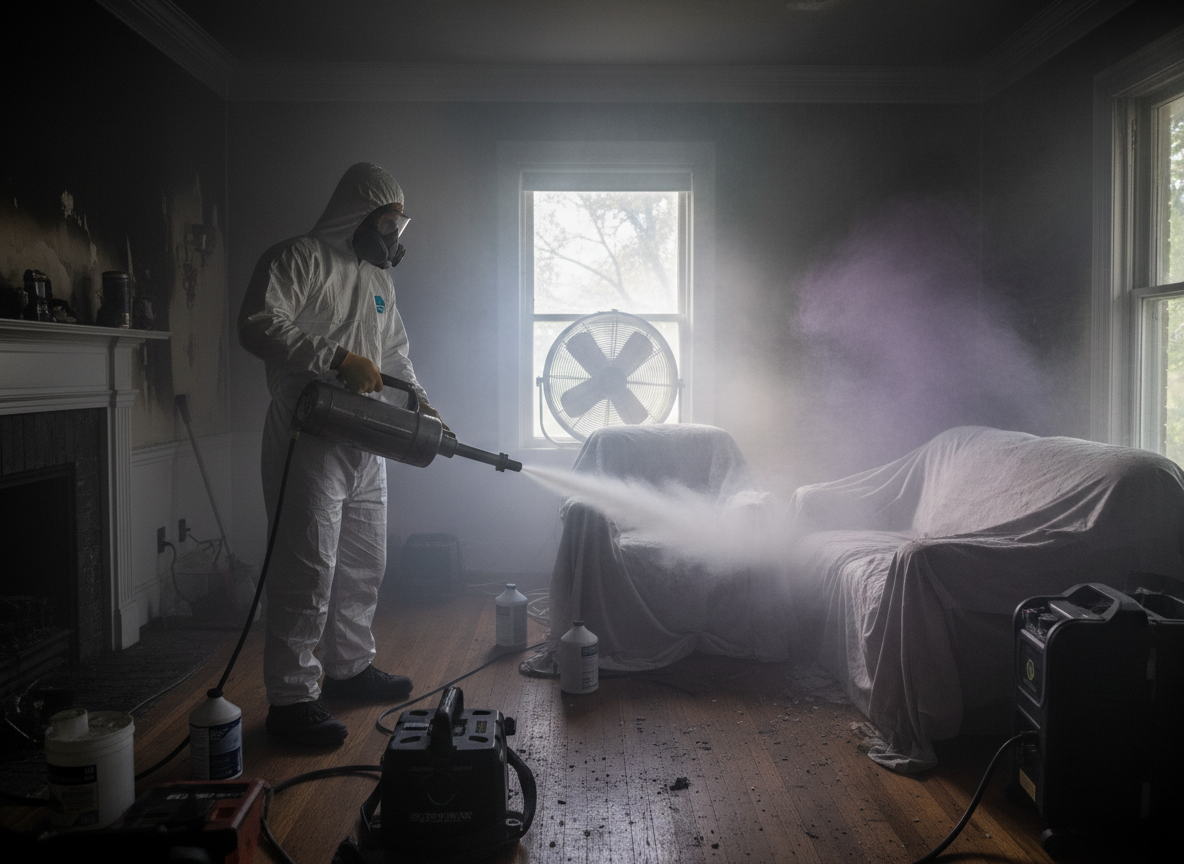
In Winnetka's post-1950s housing stock near Winnetka Park and Pierce College, smoke from structure fires often penetrates porous materials like drywall, insulation, and hardwood floors more deeply than in newer builds. Warm dry summers in the mild Mediterranean climate allow residual odors to linger in HVAC systems and attic spaces, especially when winds carry soot into Sherwood Forest neighborhoods. Effective removal requires hydroxyl generators and thermal fogging rather than simple ozone treatments, which can fail to reach embedded particulates in older ductwork common throughout Canoga Park and Reseda borders.
Technicians must account for Los Angeles County building codes when sealing and cleaning after fires, particularly in multi-unit buildings where shared walls allow odor migration. Edge cases include pet dander trapped in carpet padding that reactivates smells during humidity spikes, or kitchen cabinetry absorbing grease-laden smoke that standard cleaning misses. Homeowners in Woodland Hills often overlook subfloor contamination, leading to recurring odors months later when temperatures rise.
Proper sequencing prevents secondary damage: initial air scrubbing precedes surface cleaning, followed by sealing with odor-blocking primers rated for smoke. Skipping ventilation assessment in dry summer conditions can leave pockets of odor in crawl spaces typical of Winnetka homes. Always test with a blacklight and olfactory inspection rather than relying solely on air quality meters.
Technician insight
In Winnetka, the thing that catches most people out with odor removal after fire is how the dry summer air lets smoke sink into the original plaster and lathe walls common around Sherwood Forest. Homeowners try masking with sprays and it just comes back once the heat hits. You have to pull baseboards and check under the subfloor near Pierce College properties or the job fails.
Sherwood Forest Smoke in Attic
A fire in an adjacent unit sent smoke through shared attic space into a Winnetka home. Inspection found soot settled in insulation above bedrooms. We removed contaminated material, treated with hydroxyl generators, and sealed rafters. Odors cleared without recurrence during the following warm season.
How it works
- 1
Initial Assessment
Inspect affected rooms, HVAC, and hidden cavities in Winnetka homes to map smoke paths.
- 2
Source Removal
Extract charred materials and clean surfaces before odor treatment begins.
- 3
Odor Neutralization
Apply thermal fogging and hydroxyl generators to penetrate porous materials.
- 4
Sealing and Verification
Apply primers and confirm no residual odors remain through multiple inspections.
Pricing
Cost depends on square footage treated, depth of smoke penetration into older Winnetka construction, and whether HVAC cleaning is required.