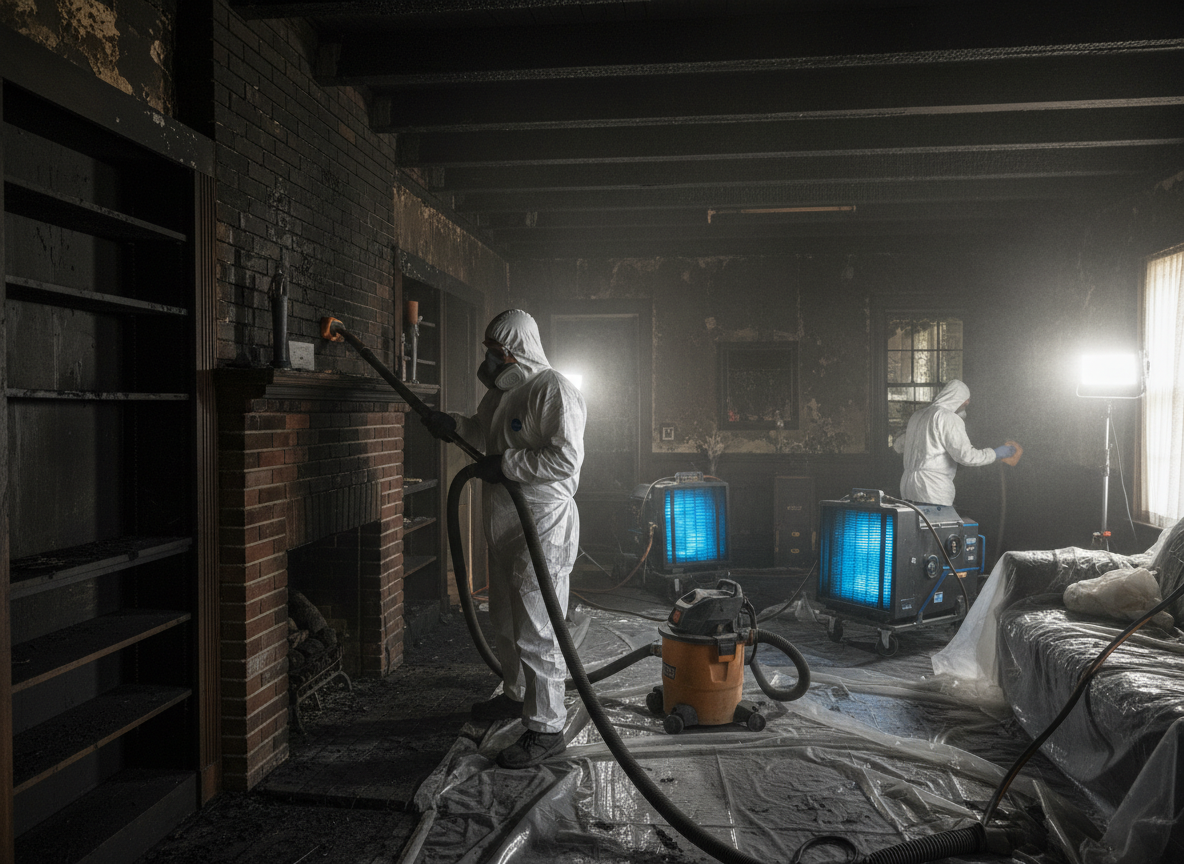
Winnetka homes built in the 1950s and 1960s near Winnetka Park and Pierce College often feature plaster walls, hardwood floors, and older HVAC systems that trap smoke particles deeply during the warm dry summers typical of Los Angeles County. Smoke from even small fires travels through ductwork and settles in attics and wall cavities, requiring more than surface cleaning. Technicians must use air scrubbers with HEPA filtration and thermal fogging to neutralize residues without spreading contaminants to adjacent properties in Sherwood Forest or nearby Canoga Park.
Dry Mediterranean conditions accelerate how smoke bonds to porous materials like stucco exteriors and insulation common throughout Reseda and Woodland Hills. Edge cases include hidden residue in electrical boxes or under flooring that later causes corrosion if missed. Proper disposal follows Los Angeles County guidelines for soot-laden debris, and technicians document each layer removed to prevent recontamination during the dry season when windows stay open more often.
Homeowners sometimes attempt DIY ozone machines that only mask odors temporarily in these older structures. Professional protocols include chamber testing for VOC levels and targeted removal of affected drywall sections rather than blanket treatments that can damage sound materials.
Technician insight
In Winnetka, the thing that catches most people out with Smoke remediation is how our warm dry summers let fine particles travel through the unsealed stucco and lath walls typical of 1950s homes near Sherwood Forest and settle in places you cannot see without opening cavities.
Attic smoke in a Winnetka residence
Smoke from a kitchen fire migrated upward through an older HVAC chase in a home near Winnetka Park. Inspection revealed heavy residue on insulation and rafters that standard wiping would miss. Crews contained the attic, removed contaminated sections, cleaned remaining surfaces, and sealed to prevent future off-gassing during dry summer months.
How it works
- 1
Initial Assessment
Inspect all affected rooms, HVAC runs, and attic spaces to map smoke migration patterns specific to Winnetka construction.
- 2
Containment Setup
Isolate zones with plastic barriers and negative air machines to keep particles from moving into unaffected areas like those near Winnetka Park.
- 3
Particle Removal
Apply HEPA vacuuming, chemical sponges, and media blasting on hard surfaces while protecting original woodwork common in local homes.
- 4
Odor Neutralization
Deploy hydroxyl generators and sealing agents formulated for Mediterranean climate residues that linger in dry air.
- 5
Final Verification
Test air quality and surfaces before returning access, confirming no re-soiling risk during warm summer conditions.
Pricing
Cost depends on square footage affected, depth of smoke penetration into older building materials, and whether HVAC cleaning is required.