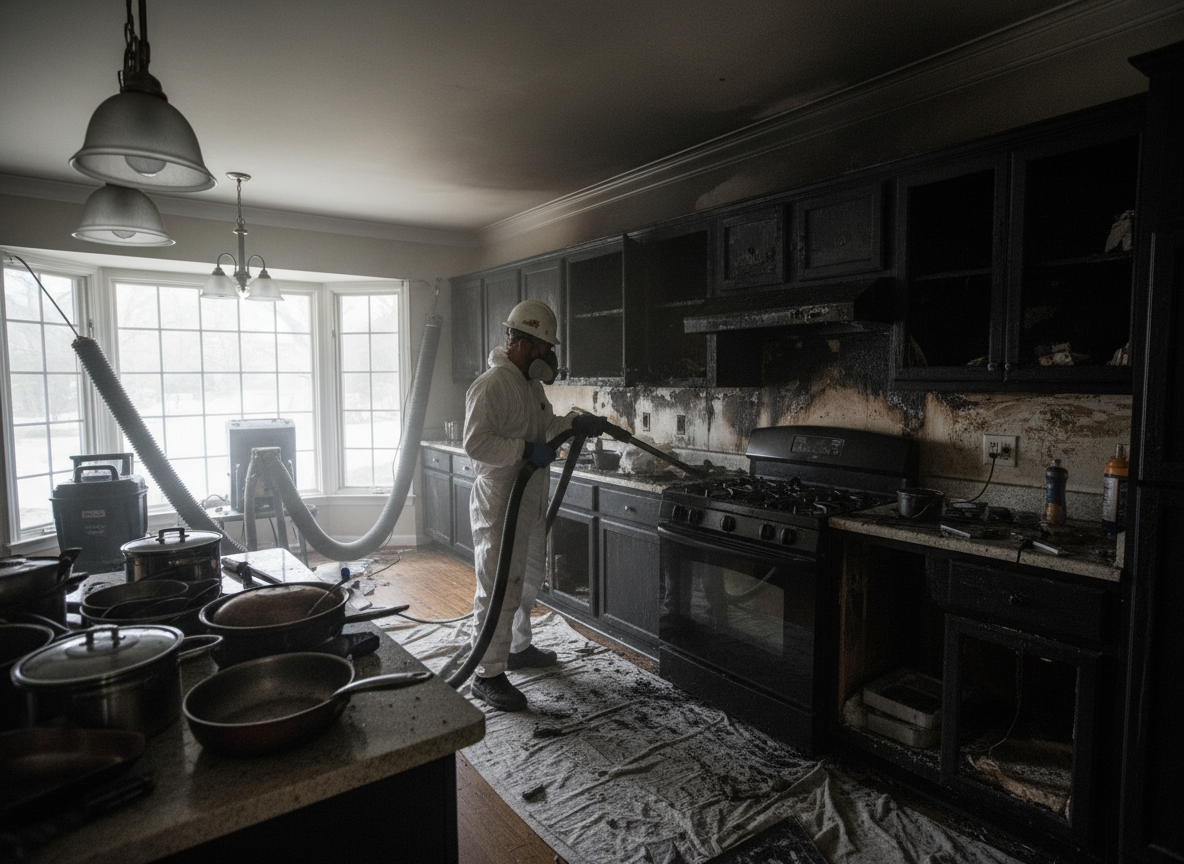
Winnetka homes built from the 1950s through the 1970s often feature lath-and-plaster walls and older HVAC systems that pull soot deep into ductwork during a kitchen fire. Warm dry summers common in Los Angeles County let fine grease particles settle on surfaces before residents notice, turning a contained stovetop incident into widespread odor problems across multiple rooms. Technicians start by isolating the kitchen, then use negative air machines to prevent cross-contamination into adjacent living areas near Winnetka Park or Sherwood Forest.
Pierce College area properties frequently have flat roofs and minimal attic ventilation, so smoke rises and lingers in ceiling cavities longer than in newer construction. Kitchen fires here commonly involve grease that bonds to textured ceilings and cabinet interiors, requiring emulsifying cleaners rather than standard degreasers. Crews test pH levels on surfaces before sealing to avoid re-bleeding stains once humidity returns in the mild Mediterranean winters.
Nearby Canoga Park and Reseda homes share similar post-war electrical layouts that can allow hidden wiring damage when a fire starts at the range. After visible cleanup, infrared scans locate residual heat pockets inside walls that could reignite if missed. Final deodorization uses hydroxyl generators suited to the dry local air, which carries odors farther than in coastal zones.
Restoration teams based at 7574 Winnetka Ave respond within hours because traffic on nearby corridors can delay access to Woodland Hills properties. Every job includes detailed photo documentation for insurance adjusters familiar with Los Angeles County claims.
Technician insight
In Winnetka the thing that catches most people out with kitchen fire cleanup is how quickly soot travels through the original 1960s ductwork when the system kicks on after a warm summer day. Homeowners often wipe visible counters and think the job is done, but the fine grease film stays inside the return vents and reappears weeks later when the first Santa Ana winds lower humidity.
Sherwood Forest Kitchen Fire
A cooking fire on a gas range spread soot through an open floor plan into the living room of a 1964 Winnetka home. Inspection showed residue inside the return vents and along the ceiling joists. Crews isolated the kitchen, cleaned all surfaces and ducts, then ran hydroxyl treatment for 48 hours. The family returned without lingering odor or visible marks.
How it works
- 1
Secure And Assess
Technicians arrive 24/7, shut down HVAC, and document all affected rooms before any cleaning begins.
- 2
Contain The Area
Plastic barriers and negative air machines prevent soot from migrating into hallways or bedrooms.
- 3
Remove Residue
Specialized emulsifiers lift grease and carbon from cabinets, ceilings, and appliances without damaging original finishes.
- 4
Deodorize And Seal
Odor-neutralizing equipment runs until readings drop, then surfaces receive stain-blocking primer where needed.
- 5
Final Verification
Air quality checks and walkthrough confirm the home meets pre-loss conditions before handover.
Pricing
Cost depends on square footage affected, smoke migration into walls, and whether contents require off-site cleaning.