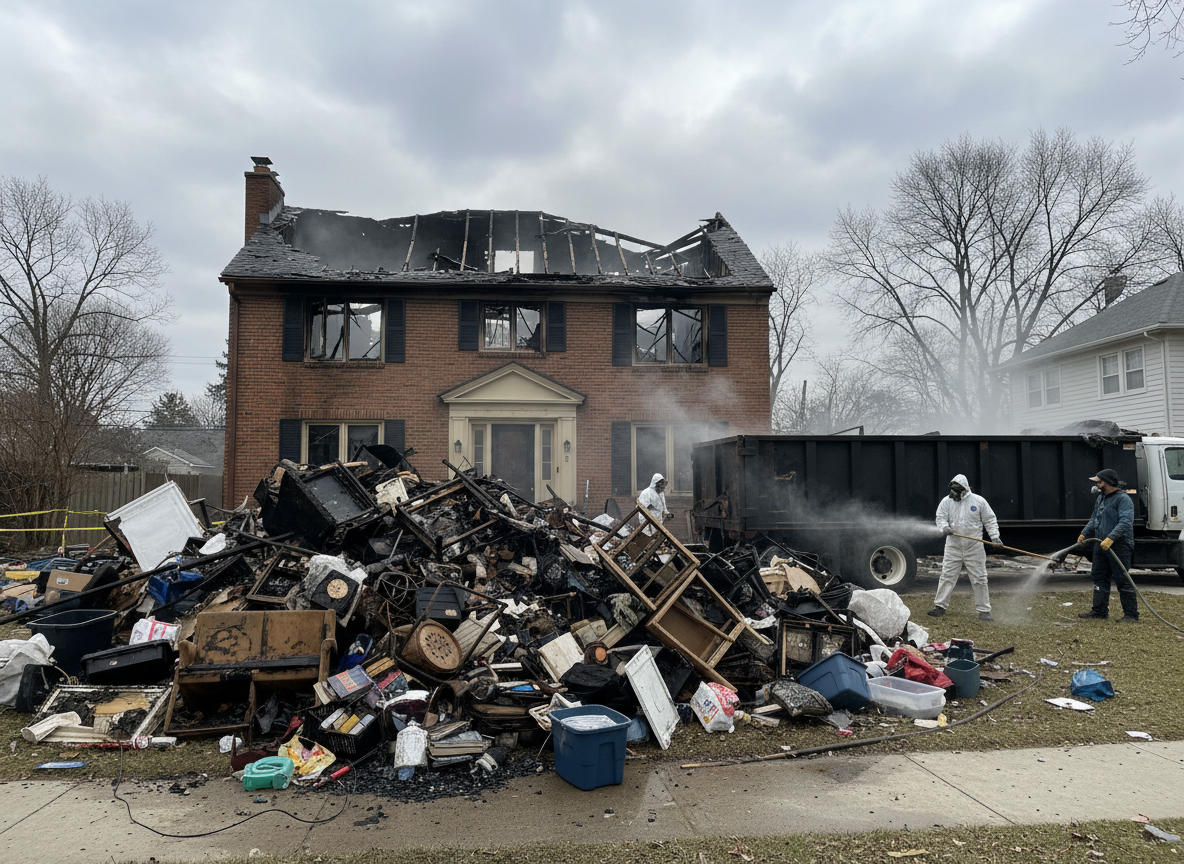
Winnetka's housing stock from the 1950s and 1960s features single-story ranch homes with attics and crawl spaces that trap soot and charred debris when hoarding materials ignite. Fire damage restoration crews must pull insulation, drywall, and subflooring in layers because paper, fabric, and plastic piles create deep fuel pockets that standard smoke removal misses. In Los Angeles County, older electrical systems and knob-and-tube wiring in these homes often contribute to ignition points hidden behind accumulated items.
Mild Mediterranean climate with warm dry summers speeds surface drying but leaves hidden moisture in compacted hoard layers, leading to mold growth weeks after the fire is out. Crews working near Winnetka Park or close to Pierce College routinely encounter properties where summer heat bakes residue into hardwood floors and cabinets, requiring specialized solvents and multiple passes. Nearby areas like Canoga Park and Reseda share similar soil and terrain that can affect drainage when water is used during suppression and cleanup.
Edge cases include structural compromise in load-bearing walls weakened by prolonged burning of stacked belongings and the need to coordinate with Los Angeles County health departments when biohazards mix with fire debris. Homeowners in Sherwood Forest often underestimate how smoke migrates through shared fences and vents into neighboring yards, requiring perimeter containment before interior work begins.
Technician insight
In Winnetka, the thing that catches most people out with hoarding cleanup after fire is how the dry summer air and older single-story homes in Sherwood Forest let smoke travel through unsealed attic spaces and shared wall voids, requiring extra time to chase residue that standard protocols miss.
Sherwood Forest Home With Attic Hoard Ignition
A fire started in stacked boxes in the attic of a 1960s ranch house near Winnetka Park. We found soot had migrated through unsealed vents into every room below. We removed the hoard layer by layer, treated the attic and wall cavities, and cleared the property for reentry within the required county timeline.
How it works
- 1
Site Assessment
Inspect structure, map hoard density, and identify hidden fire paths in attics and walls of Winnetka homes.
- 2
Contents Removal
Segregate salvageable items from contaminated debris while protecting intact flooring and fixtures.
- 3
Debris And Soot Extraction
Remove charred materials and treat surfaces with agents suited to dry summer conditions.
- 4
Final Clearance And Restoration
Verify air quality and complete repairs before returning the property to the owner.
Pricing
Pricing varies with hoard volume, fire extent, and access challenges; request an upfront quote based on inspection.