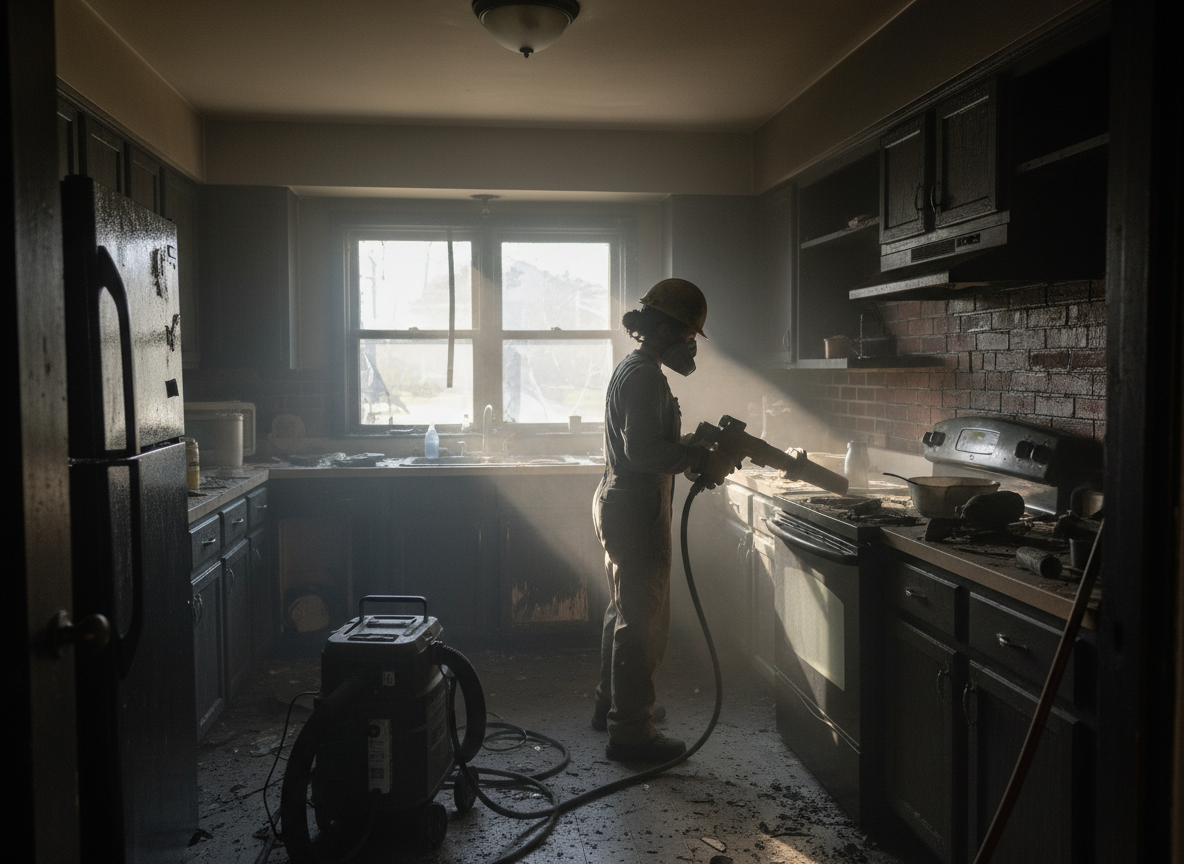
Winnetka homes, many built between the 1950s and 1970s near Winnetka Park and along Winnetka Avenue, often feature stucco exteriors and older HVAC systems that allow smoke to travel through wall cavities and ductwork during the warm dry summers typical of the mild Mediterranean climate. After a fire, crews must test for hidden soot in these voids because standard surface cleaning leaves odors that return when temperatures rise. Properties close to Pierce College and the 101 freeway also contend with wind-driven ember patterns that push smoke farther into attics than in newer tracts.
Los Angeles County building codes require documentation of all affected materials before any demolition, especially in neighborhoods bordering Canoga Park and Reseda where older electrical wiring can create additional hazards once insulation is compromised. Restoration teams use negative-air machines sized for the square footage while isolating Sherwood Forest homes that sit on smaller lots with shared fences, preventing cross-contamination to adjacent properties. Dry summer conditions mean soot particles remain airborne longer, requiring extended dwell times for cleaning agents.
Work in Woodland Hills and Reseda spill-over areas frequently involves concrete slab homes where smoke migrates under baseboards and into subflooring. Technicians document every step with photos for insurance adjusters and coordinate with local disposal sites that accept charred debris from Los Angeles County projects. Because summers stay warm and dry, dehumidification is rarely needed, but odor-neutralizing sealers must be applied before new finishes to prevent re-odor when Santa Ana winds return.
Technician insight
In Winnetka the thing that catches most people out with Fire damage restoration near me is how smoke travels through the original knob-and-tube wiring channels in 1950s stucco homes around Winnetka Park, especially after a dry summer when low humidity lets particles stay suspended longer than owners expect.
Sherwood Forest attic fire
Smoke from an electrical fire in a Sherwood Forest garage reached the attic shared with the main house. Inspection showed soot inside HVAC ducts and behind original plaster walls. Crews isolated the system, cleaned cavities with HEPA equipment, and sealed surfaces before drywall repair. Home was cleared for occupancy within ten days.
How it works
- 1
Initial Assessment
Technician arrives within hours, documents visible and hidden damage using moisture meters and thermal imaging around Winnetka homes.
- 2
Containment and Safety
Plastic barriers and negative air are set up to protect unaffected rooms, especially important in dense Sherwood Forest blocks.
- 3
Soot and Debris Removal
HEPA vacuuming and specialized cleaning agents remove residue from surfaces, ducts, and cavities common in 1950s-1970s construction.
- 4
Odor Neutralization and Restoration
Sealers and air scrubbers eliminate lingering smells before repairs begin, followed by reconstruction to match original finishes.
Pricing
Upfront written quotes after on-site inspection; final cost depends on square footage affected, smoke migration into cavities, and whether contents cleaning is required.