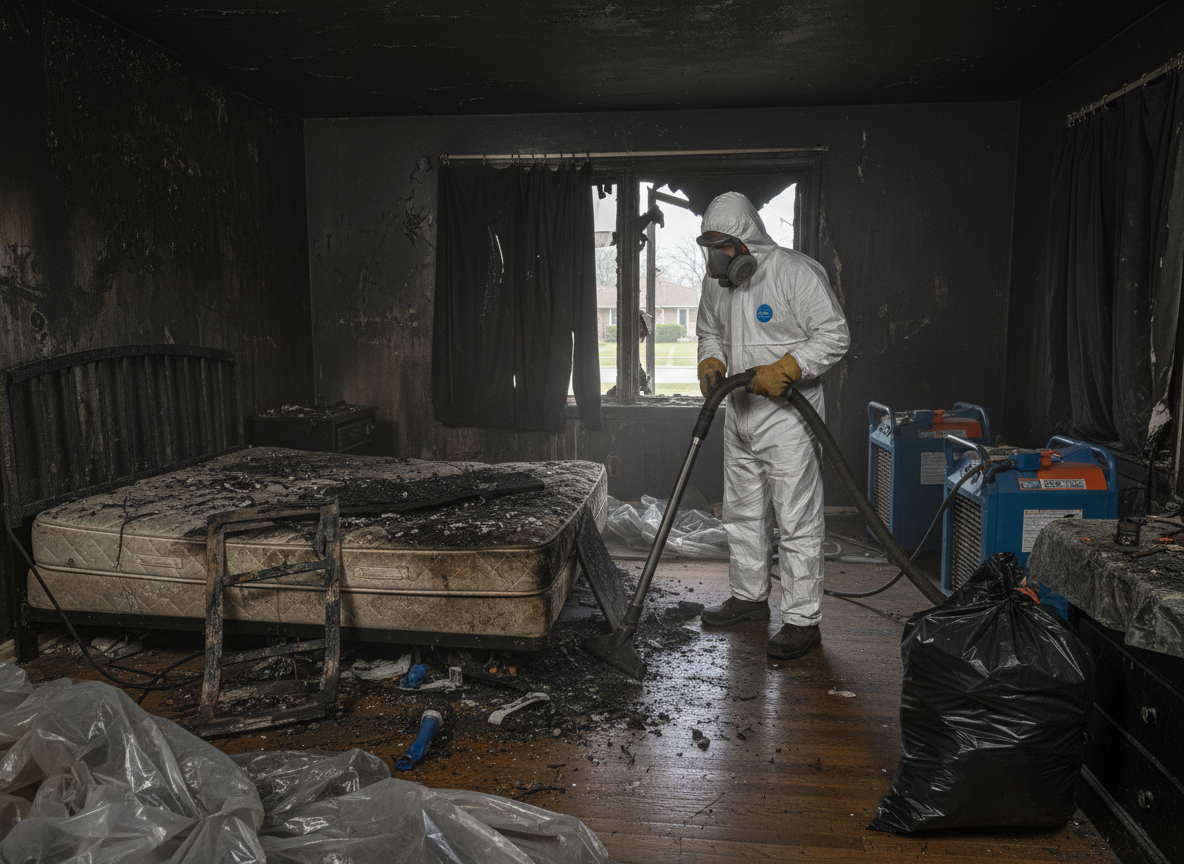
Bedroom fires in Winnetka often leave heavy soot on drywall, carpet, and upholstered furniture because many homes here date to the 1950s and 1960s with older HVAC systems that spread particulates quickly through ducts. The mild Mediterranean climate with warm dry summers means low humidity, so soot stays powdery and travels farther before settling, especially in single-story ranch houses common around Sherwood Forest and near Winnetka Park. Technicians must separate and bag contaminated textiles immediately to prevent re-soiling during transport to cleaning facilities in nearby Reseda or Canoga Park.
Edge cases include hidden charring behind baseboards and inside mattress foundations, which can release odors weeks later if missed. Los Angeles County building codes require permits for any structural drywall replacement exceeding ten square feet, so crews document every cut before removal. Smoke can penetrate foam insulation in bedroom walls, requiring odor-sealing primers rather than simple cleaning. Working near Pierce College, crews also watch for student housing with shared walls that increase cross-contamination risk between units.
Dry summers raise the chance of re-ignition from residual embers in insulation, so final clearance testing includes thermal imaging before homeowners return. Crews use negative-air machines with HEPA filtration to keep airborne particles from drifting into unaffected rooms during the multi-day process typical for Winnetka properties.
Technician insight
In Winnetka, the thing that catches most people out with Bedroom fire damage cleanup is how quickly soot travels through the original 1960s ductwork in homes near Winnetka Park. Dry summer air keeps particles airborne longer, so if you open windows too soon the residue ends up in living rooms two houses down. We always seal the system first.
Hidden Soot in Sherwood Forest Bedroom
A small electrical fire in a nightstand spread soot through an unsealed HVAC register in a 1958 ranch house off Winnetka Avenue. We found residue inside the wall cavities and mattress coils that standard vacuuming missed. After containment, targeted cleaning, and odor treatment, the family returned without lingering smells.
How it works
- 1
Initial Assessment and Containment
Technicians arrive within hours, document damage room by room, and set up containment barriers to stop soot migration into hallways or adjacent bedrooms.
- 2
Soot Removal and Surface Cleaning
Dry and wet cleaning methods remove loose and embedded soot from walls, ceilings, and furniture without spreading particles through the home.
- 3
Odor Neutralization
Thermal fogging and ozone treatments target smoke odors trapped in porous materials like carpet padding and drywall in older Winnetka homes.
- 4
Final Clearance and Restoration
Air quality testing and visual inspection confirm the bedroom is safe before any reconstruction or furniture return.
Pricing
Pricing depends on square footage affected, soot penetration depth, and whether HVAC cleaning is required; upfront quotes provided after on-site assessment.