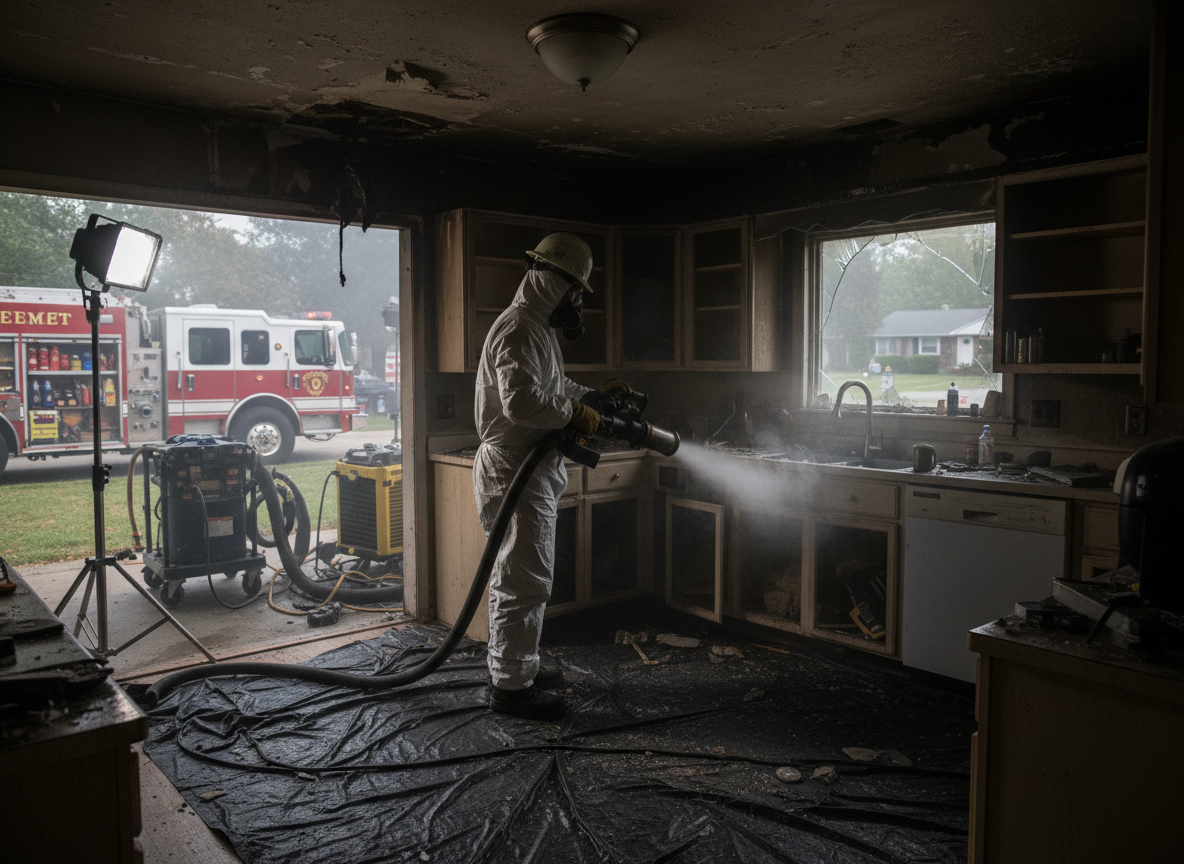
Winnetka homes built in the 1950s and 1960s often feature wood framing and lath-and-plaster walls that trap smoke and soot deep into cavities after even a contained kitchen fire. In the area's mild Mediterranean climate with warm dry summers, low humidity lets fine particles travel farther through HVAC systems before settling, requiring technicians to isolate ductwork early and prevent recontamination across multiple rooms. Properties near Winnetka Park and Pierce College sit on flatter terrain that funnels wind during Santa Ana events, pushing smoke into neighboring Sherwood Forest residences and complicating containment.
Los Angeles County code requires permits for any structural member replacement after fire exposure, so crews must document char depth on joists before demolition begins. Older single-story ranch homes common in Canoga Park and Reseda frequently have knob-and-tube wiring that melts during ceiling fires, creating hidden arc faults that only surface once drywall is opened. Dry summer conditions also mean ash and soot remain powdery longer, increasing the risk of cross-contamination if negative air machines are not set up within the first hour of arrival.
Technicians dispatched from the 7574 Winnetka Ave location can reach most Winnetka addresses in under fifteen minutes at any hour, allowing them to board openings and apply corrosion inhibitors to copper piping before overnight dew forms. This timing matters because the region's occasional marine layer can introduce moisture that sets soot into porous materials like brick fireplaces found in many Woodland Hills border homes.
Technician insight
In Winnetka, the thing that catches most people out with 24 hour fire restoration is how the dry summer air lets soot travel through the open floor plans of 1960s ranch homes near Sherwood Forest, turning a single-room incident into whole-house contamination before crews arrive.
Kitchen Fire Spread Through Attic
A contained cooking fire in a Winnetka single-story home sent smoke into the attic shared with adjacent rooms. Inspection showed soot had migrated through unsealed ceiling penetrations into two bedrooms. Crews isolated the HVAC, performed targeted cleaning, and completed odor treatment within 36 hours, allowing the family to return after clearance testing.
How it works
- 1
Emergency Board-Up
Secure all openings with plywood and tarps to prevent weather intrusion and unauthorized entry while assessment continues.
- 2
Smoke and Soot Mapping
Use thermal imaging and air sampling to trace smoke paths through walls, attics, and HVAC systems specific to Winnetka construction.
- 3
Contents Removal and Cleaning
Pack out salvageable items for off-site cleaning and document unsalvageable materials for insurance records.
- 4
Structural Drying and Odor Removal
Deploy air movers, dehumidifiers, and hydroxyl generators to address residual moisture and embedded odors in older plaster.
- 5
Final Clearance Testing
Perform visual and air-quality checks before reconstruction begins to meet Los Angeles County requirements.
Pricing
Upfront quotes provided after on-site inspection; costs vary with fire size, smoke migration, and materials affected.